
Blogs
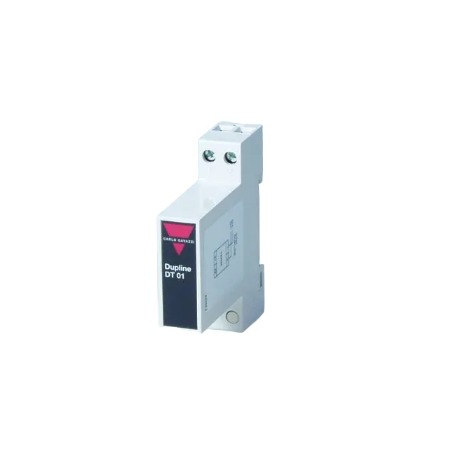
Dupline DT01 Line Terminator Reliability Testing — Ensuring Stable Fieldbus Performance
Oct

In industrial automation, system reliability is the foundation of consistent production and control. Communication stability between sensors, controllers, and actuators defines how well an automation network performs. Among the components that guarantee this reliability in a Dupline® fieldbus system, the Carlo Gavazzi DT01 Line Terminator plays a subtle yet essential role.
In this article, we explore the reliability testing process, technical characteristics, and performance validation of the DT01 module — a trusted line terminator used to stabilize and protect Dupline networks.
For detailed product information and original sourcing, please visit https://www.ayingo.com.
1. Understanding the Role of the Dupline DT01 Line Terminator
In every fieldbus network, signal integrity depends on proper termination. The Dupline DT01 is a dedicated line terminator module designed to stabilize signal transmission across the Dupline bus by preventing reflection, noise, and communication loss.
When used correctly at the end of the Dupline cable, the DT01 ensures that the signal is absorbed rather than reflected back into the network. This prevents oscillation, signal distortion, and false data transmission. The result is a reliable, interference-free communication link between all devices in the system.
Without a properly installed and tested line terminator like the DT01, even a high-quality network can experience random data errors, delayed responses, or bus failures.
2. The Importance of Reliability Testing in Fieldbus Systems
Reliability testing verifies that the DT01 line terminator consistently maintains its designed performance under diverse environmental and electrical conditions.
For industrial users, this process is essential because the module is typically deployed in critical automation zones, such as:
-
Factory production lines
-
Energy distribution systems
-
Process automation networks
-
Building automation and HVAC control
Reliability testing is not just about confirming hardware durability — it’s about validating signal integrity, stability, and long-term operational consistency.
3. Key Objectives of DT01 Reliability Testing
The reliability test program for the Carlo Gavazzi DT01 typically focuses on three main objectives:
-
Electrical Stability – Ensuring consistent impedance and resistance across a wide range of voltage levels.
-
Thermal Resistance – Maintaining functionality across extreme temperature variations typical in industrial sites.
-
Environmental Durability – Guaranteeing performance under vibration, humidity, and mechanical stress.
Through these test phases, engineers confirm that the DT01 will perform reliably in any Dupline® network configuration.
4. Electrical Reliability Testing
Electrical reliability testing involves applying operational voltages, noise signals, and transmission loads to simulate real-world bus communication.
4.1. Impedance Validation
Each DT01 module is tested for impedance matching with the standard Dupline bus line resistance, ensuring that no reflections occur during data transmission. The ideal impedance ensures clean waveforms and maximum transmission distance.
4.2. Signal Reflection Tests
Using an oscilloscope and signal analyzer, engineers measure signal reflection and distortion levels. The DT01 must maintain less than 1% signal loss across its rated range, ensuring minimal waveform degradation.
4.3. Surge and Overvoltage Resistance
The DT01 is exposed to voltage surges to ensure it can handle transient events caused by lightning, switching, or nearby equipment interference. This step ensures protection of connected modules and uninterrupted bus communication.
You can find detailed product specifications and compatible Dupline accessories at https://www.ayingo.com.
5. Thermal and Environmental Reliability Testing
5.1. Temperature Endurance
Industrial fieldbus systems often operate in environments with fluctuating temperatures. During testing, the DT01 is exposed to temperature cycling between -40°C and +85°C.
The module must maintain stable signal absorption and show no change in internal resistance or impedance.
5.2. Vibration and Shock Testing
To simulate installation in vibrating machinery or mobile systems, the DT01 undergoes vibration and shock tests following IEC 60068-2 standards.
After these tests, the module must remain mechanically intact and fully functional.
5.3. Humidity Resistance
The DT01 is placed in a controlled humidity chamber (95% RH at 60°C) to ensure its materials resist corrosion and moisture infiltration. The encapsulated design prevents internal condensation that could lead to short circuits or resistance drift.
These environmental tests confirm that the DT01 is suitable for harsh industrial and outdoor applications — one of the reasons it’s trusted in global Dupline installations.
6. Long-Term Operational Testing
Reliability also depends on long-term stability. During continuous operation testing, the DT01 module is connected to a live Dupline network running under load for over 1000 hours.
During this period, performance parameters such as voltage drop, impedance balance, and signal waveform are continuously monitored. The DT01 must maintain performance consistency without degradation or signal loss.
This endurance test proves that the DT01 can function continuously in 24/7 automated systems with minimal maintenance.
7. Test Results and Performance Summary
After completing all test cycles, the DT01 exhibits the following verified characteristics:
| Parameter | Result | Test Standard |
|---|---|---|
| Impedance Stability | ±2% deviation | IEC 61158 |
| Signal Reflection | <1% | Internal Standard |
| Temperature Resistance | -40°C to +85°C | IEC 60068-2-14 |
| Humidity Resistance | 95% RH, no degradation | IEC 60068-2-30 |
| Vibration Endurance | Passed (no damage) | IEC 60068-2-6 |
| Surge Tolerance | Up to 1.5kV | IEC 61000-4-5 |
| Continuous Operation | >1000h, no drift | Manufacturer Test |
These results demonstrate that the Carlo Gavazzi DT01 line terminator exceeds industrial-grade reliability expectations and ensures flawless communication within the Dupline network.
8. Integration Tips for Reliable Fieldbus Performance
Even with a robust terminator like the DT01, reliability depends on proper installation and maintenance. Here are key integration practices for engineers:
-
Install the DT01 at the physical end of the Dupline line — never in the middle or parallel connection.
-
Verify polarity and connection orientation according to the Dupline wiring manual.
-
Use shielded cables for long-distance or noise-prone installations.
-
Perform periodic network integrity tests using a Dupline test unit such as the GTU8 to ensure consistent bus signal quality.
-
Inspect terminals for corrosion or looseness in humid or outdoor applications.
Following these practices ensures the DT01 functions at peak reliability throughout its lifecycle.
9. Advantages of Using the Carlo Gavazzi DT01
-
Proven Dupline compatibility: Fully certified for Carlo Gavazzi Dupline systems.
-
High surge immunity: Protects the network from voltage fluctuations and external noise.
-
Compact and easy installation: DIN rail or direct mounting options.
-
Maintenance-free design: Passive operation with long service life.
-
Optimized for signal quality: Guarantees accurate communication between modules and control devices.
To purchase authentic Carlo Gavazzi DT01 modules or explore related Dupline products, visit https://www.ayingo.com.
10. Why Reliability Testing Matters for Industrial Networks
Modern factories rely on continuous data flow for control, diagnostics, and optimization. A single communication failure can result in downtime, reduced efficiency, or even safety hazards.
Reliability testing ensures that every DT01 unit performs as expected — even after years of use in challenging environments. By investing in quality components like the Carlo Gavazzi DT01, companies can avoid costly interruptions and improve long-term system resilience.
As industries adopt smart manufacturing, IoT, and real-time control systems, dependable fieldbus communication becomes more important than ever. The DT01’s reliability ensures your Dupline network stays synchronized, responsive, and maintenance-free.
11. Conclusion
The Carlo Gavazzi Dupline DT01 line terminator is not just a small accessory — it’s a vital component for maintaining signal integrity and network reliability in fieldbus systems.
Its tested durability, superior impedance control, and environmental endurance make it the preferred choice for industrial automation professionals worldwide.
Through comprehensive electrical, thermal, environmental, and endurance testing, the DT01 proves its capability to deliver consistent, reliable performance under real-world conditions.
For engineers and integrators seeking original, tested, and certified DT01 modules, visit
👉 https://www.ayingo.com
to explore detailed specifications, purchase options, and expert support.
Invest in reliability — because in industrial automation, every signal counts.
