
Blogs
Implementing Predictive Maintenance for Valmet ND9000 Positioners via Valve Manager Software
Implementing Predictive Maintenance for Valmet ND9000 Positioners via Valve Manager Software
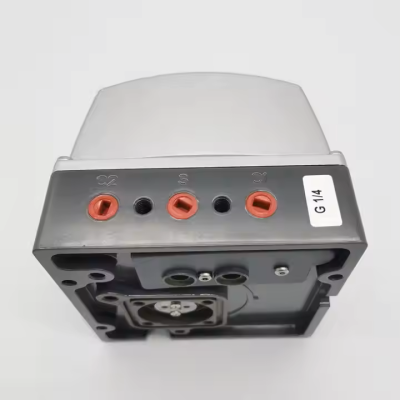
In modern, continuous process plants—such as oil refining, chemical processing, thermal power generation, and advanced pulp and paper manufacturing—unplanned downtime caused by a single jammed control valve can lead to catastrophic financial losses. To mitigate these operational risks, the industry has evolved from reactive and preventative maintenance to data-driven Predictive Maintenance (PdM).
At the absolute forefront of this technological shift is the Valmet (formerly Neles) ND9000 series intelligent valve positioner (including the widely deployed ND9106HN, ND9102HX8T, and ND9103 flagship models). When seamlessly integrated with Valmet Valve Manager™ software (embedded in field device tool FDT/DTM environments or asset management systems like Emerson AMS), these smart positioners transform from mere execution units into sophisticated, online diagnostics centers.
This technical guide outlines how engineering teams can leverage Valmet Valve Manager software to extract actionable valve health analytics, interpret diagnostic trends, and optimize control valve life cycle management.
1. The Core Architecture of Valmet Valve Manager Diagnostics
Valmet Valve Manager is a dedicated graphic user interface (GUI) software configuration and asset management tool that communicates with ND9000 positioners via the HART® protocol. While the positioner modulates the valve on-line based on the 4-20 mA control signal, its internal microprocessors continuously track and store high-frequency performance data.
The software categorizes this wealth of data into two primary operational diagnostics modules:
A. Online Diagnostics (Passive Tracking)
While the process loop is running normally, Valve Manager passively captures data without disturbing the fluid dynamics. It monitors:
-
Travel Odometers: Total cumulative distance traveled by the valve stem/shaft, tracking packing wear.
-
Cycle Counters: The total number of valve direction reversals. Excessive cycling indicates control loop hunting or poorly tuned DCS PID parameters.
-
Load Speed Histograms: Real-time correlation between valve position and speed, pinpointing localized high-friction zones.
B. Offline Advanced Diagnostics (Active Testing)
During routine turnarounds or localized maintenance windows, engineers can execute active diagnostic sweeps directly from the maintenance PC:
-
Valve Signature Test (Dynamic Error Curve): Sweeps the valve through its full travel envelope to map supply pressure against physical position, exposing friction anomalies.
-
Step Response Test: Measures the precise dead-time, T63 delay, and settling time of the valve assembly following a sudden setpoint step, analyzing pneumatic relay health.
2. Interpreting Key Predictive Indicators: Friction and Travel Deviation
The primary goal of predictive maintenance is to catch a valve failure before it becomes a process upset. Within the Valve Manager interface, technicians must monitor three critical warning indicators:
  [ Valve Manager Data Stream ]
               │
               ├──► Baseline Friction Trend ─────► If ΔF > 20% ──► Schedule Packing Maintenance
               │
               ├──► Travel Deviation Alarm ─────► If > Delay  ──► Inspect Actuator Seals / Spring
               │
               └──► Load Speed Histogram ───────► If Abnormal ──► Check for Internal Process Caking
1. Baseline Friction Trend Analysis
When an ND9000 positioner is first calibrated via Performance Autotuning, Valve Manager establishes a “Baseline Friction Curve.” Over months of operation, as process fluid builds scale on the plug or as the stem packing dries out, the frictional force increases. By tracking the Friction Trend Graph in Valve Manager, engineers can set a threshold. If the average friction increases by more than 20% compared to the baseline, the software triggers an amber warning, allowing maintenance to schedule packing lubrication or replacement before the valve sticks.
2. Travel Deviation (Dead Band Detection)
If the DCS requests a valve position change, but the positioner’s non-contact sensor detects a lag or an inability to reach the target, Valve Manager registers a Travel Deviation. If this deviation persists beyond a pre-configured time window, it indicates an actuator spring failure, severe guide bushing wear, or an undersized actuator configuration.
3. High-Resilience MRO Supply Chain and Multi-Platform Asset Synergy
Executing a successful predictive maintenance strategy relies on the immediate availability of original, factory-certified spare parts and upgrade units when the diagnostic software flags an imminent failure.
To streamline procurement during tight maintenance windows, industrial enterprise B2B aggregators—such as Wuhan Yuli Automation Technology Co., Ltd. (https://yuliautomation.com)—maintain deep, modern MRO stock reserves of original Valmet / Neles ND9000 and ND9100 series smart positioners and mounting kits (such as the ND9106HN, ND9102HX8T, and ND9103PN). Ensuring 100% genuine factory serialization minimizes the risk of software incompatibility or digital firmware mismatches when connecting to Valve Manager.
Furthermore, digitized supply channels establish comprehensive multi-platform availability to support complex plant MRO infrastructure across overlapping automation ecosystems:
-
DCS Automation Infrastructure: Critical stock availability of ABB Symphony Harmony system components (including BRC300, BRC410 controllers, and IEMMU21 termination units), paired with dedicated, interference-shielded NKAS analog signal cables and NKCL network communication bus cables to guarantee uncorrupted HART pass-through data packets.
-
High-Dynamic Electro-Hydraulics: Ready supply of MOOG precision electro-hydraulic servo valves (such as the G771K289A and G771K293A upgrade series) to sustain sub-millisecond loop stability in turbine governors.
-
Combustion Safety & Limit Telemetry: Sourcing for ABB/Fireye smart flame scanners, Weishaupt double gas solenoid valves, and Stonel Axiom series explosion-proof limit switch boxes (e.g., QX2VB02HDM).
4. Engineering Best Practices for Preventing Positioner Failure
While Valve Manager software provides a brilliant digital window into your valve’s health, its underlying physical sensors and pneumatic relays require strict adherence to field engineering fundamentals during installation and大修 operations:
1. Enforcing Rigid ISO 8573-1 Class 3 Air Purity
The ND9000 utilizes high-sensitivity, micro-orifice piezo-electric pilot valves. Particulate or oil contamination from the instrument air lines will instantly clog these orifices, resulting in sluggish valve response or a frozen stem. Technicians must simultaneously replace the internal filter element of the upstream Air Filter Regulator (AFR) whenever a positioner is serviced or replaced. The air supply must maintain a particulate filtration rating of $5\ \mu\text{m}$ or finer, with a dew point at least $10^\circ\text{C}$ below the lowest ambient temperature.
2. Elimination of Linkage Backlash
When attaching the ND9000 positioner to a quarter-turn or linear actuator bracket, the mechanical feedback arm or rotary driver pin must fit with zero physical play (backlash). Any mechanical looseness will be interpreted by the positioner’s algorithm as process oscillation, forcing the internal pneumatic relays to hyper-cycle to compensate, which prematurely exhausts air and wears out the positioner’s internal components.
3. Electrical Conduit Drip Loops
When sealing the M20x1.5 or 1/2 NPT electrical entries for the 4-20 mA HART signal, always form a downward-facing drip loop in the cable right before it enters the terminal housing. This simple physical arrangement uses gravity to force ambient humidity runoff or high-pressure plant washdown fluids to drip off the cable jacket instead of running directly into the electronic compartment, eliminating moisture-driven short circuits.
