
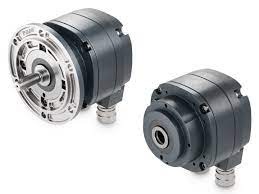

The Baumer OG8 DN 2048 CI incremental encoder represents one of the most advanced motion-feedback devices in the industrial automation field. Because modern industries require higher precision, stronger durability, and smoother integration between mechanical components and digital control systems, engineers continually search for encoders that deliver accuracy without compromising stability. Consequently, the OG8 DN 2048 CI becomes a trusted choice for demanding automation environments. With a high 2048 pulses-per-revolution resolution, a rugged mechanical structure, and a highly reliable signal interface, this encoder supports a wide range of applications that depend on precise rotational data.
To understand the true advantages of the OG8 DN 2048 CI, it helps to examine its core engineering concepts. The encoder uses advanced optical scanning technology, which ensures exceptionally clean pulse generation. Because optical components generate signals without physical contact, the system maintains a long operational life while reducing mechanical wear. Moreover, the clarity of the optical signal strengthens data accuracy, especially in facilities that face continuous vibration, electrical noise, and harsh environmental variations. Therefore, automation systems benefit from a consistent flow of high-quality feedback.
Additionally, the 2048 PPR resolution offers a significant advantage for control tasks that require fine precision. For instance, servo drives, CNC machinery, packaging stations, and high-speed conveyor mechanisms all rely on accurate rotational monitoring to maintain synchronized speeds and exact positioning. The OG8 DN 2048 CI supports these requirements confidently because each revolution generates a dense pulse count. With more pulses available for interpretation, automation controllers receive smoother feedback, enabling more precise adjustments across every control loop.
Furthermore, engineers value reliability when selecting encoders for industrial equipment. The Baumer OG8 DN 2048 CI addresses this need with a strong mechanical housing and high-quality internal components. Because industrial environments often include dust, shock, rapid acceleration cycles, and temperature fluctuations, the encoder’s robustness becomes an essential advantage. Its durable construction protects the internal optical system, allowing continuous operation even under demanding conditions. Consequently, industries that rely on uninterrupted production cycles gain a dependable feedback element for long-term use.
When looking at interface capabilities, the “CI” output variant supports industrial-grade differential signals. Because differential signals resist electrical interference, users implement the OG8 DN 2048 CI in environments that feature motors, inverters, and high-frequency equipment. Furthermore, the strong electromagnetic immunity ensures stable communication between the encoder and the controller, even over longer cable distances. This benefit enhances installation flexibility, especially in large automation systems where encoders often mount far from control cabinets.
In addition to signal reliability, the encoder integrates easily with various motion-control platforms. The device supports widely used wiring standards, allowing engineers to connect it to PLCs, digital position controllers, servo amplifiers, and automated monitoring systems without redesigning existing electrical structures. Because the encoder shares compatibility with both traditional and modern automation infrastructures, machine builders enjoy smooth system upgrades and expansions. Moreover, the encoder’s consistent electrical characteristics simplify troubleshooting and minimize commissioning time.
While the technical features support high-performance control, the mechanical design also contributes to user convenience. The OG8 series, including the OG8 DN 2048 CI, features a compact body that fits into limited mounting spaces. Because modern machines often include tightly packed components, a space-efficient encoder design becomes necessary. The encoder’s shaft size, mounting dimensions, and connector arrangement all support quick installation. Additionally, its solid mechanical stability prevents shaft misalignment issues and maintains accurate signal output throughout machine operation.
Beyond installation convenience, the encoder also requires minimal maintenance. Since the optical system operates without physical contact, internal wear does not accumulate over time. Furthermore, the sealed housing protects the optical disk and sensor assembly from dust and contaminants. Because of these qualities, maintenance teams devote less time to inspection and recalibration. This advantage increases machine uptime while lowering long-term operating costs.
Moreover, industries today prioritize continuous data accuracy for monitoring, optimization, and predictive maintenance. The OG8 DN 2048 CI supports these goals effectively. As control systems analyze the encoder’s data stream, they determine rotational velocity, shaft position, phase alignment, and rotation direction. These real-time insights allow the system to predict faults, optimize energy consumption, and detect abnormal machine behavior. Consequently, the encoder strengthens intelligent manufacturing strategies and supports Industry 4.0 implementation.
The encoder’s robust performance also benefits high-speed machinery. Because many automated systems operate at rapid rotation rates, the feedback device must maintain signal stability without distortion. The OG8 DN 2048 CI handles these speeds effectively due to its fast response time and resilient optical sensor system. Consequently, users implement it in packaging machinery, printing equipment, textile processing systems, and robotics—all of which depend on rapid motion with strict accuracy requirements.
Furthermore, industrial applications often involve complex dynamic cycles, including abrupt speed changes, emergency stops, and repetitive acceleration. The encoder’s design supports these conditions by maintaining stable pulse generation even when the shaft experiences sudden motion shifts. Because control systems rely on uninterrupted feedback, the encoder plays a crucial role in maintaining operational consistency.
In addition, the encoder supports modern safety applications. Many safety systems require precise monitoring of motion to prevent mechanical hazards. Because the OG8 DN 2048 CI provides clear and consistent pulse output, controllers detect abnormal movements quickly. This fast response enhances operator safety and strengthens machine protection mechanisms. Therefore, industries that prioritize risk reduction gain a dependable monitoring tool.
When considering environmental performance, the encoder maintains reliable output across a wide temperature range. Industrial facilities frequently experience temperature fluctuations from machinery heat, outdoor exposure, or internal HVAC cycles. Because the encoder maintains steady operation across these conditions, users depend on it for year-round reliability.
Furthermore, energy efficiency becomes increasingly important in modern automation. Since the OG8 DN 2048 CI consumes low power, it contributes to energy-optimized systems. This efficiency becomes even more significant in large installation setups where numerous encoders operate simultaneously. Lower energy consumption reduces system load and improves overall sustainability.
Another notable advantage involves the encoder’s mechanical stability. Even under continuous vibration and rotational stress, the OG8 DN 2048 CI supplies consistent data. Machines that operate under constant vibration—such as conveyors, grinders, and mixers—benefit greatly from stable encoder signals. Because vibration rarely affects the encoder’s internal components, signal integrity remains solid.
Moreover, Baumer’s long-standing reputation for precision engineering enhances user confidence. Because the company consistently produces reliable and robust automation components, engineers trust the OG8 DN 2048 CI to meet long-term operational expectations. This trust becomes essential when selecting core components for mission-critical automation systems.
Beyond its physical characteristics, the encoder also enhances productivity by improving system responsiveness. With accurate pulse data feeding into control loops, machinery reacts quicker to motion changes. Therefore, production processes maintain smoother transitions, more uniform speeds, and more accurate product handling. Improved responsiveness also reduces mechanical stress and enhances equipment lifespan.
Additionally, the OG8 DN 2048 CI supports consistent repeatability. Many industrial processes require repeated cycles with identical motion profiles. Because the encoder delivers stable data, these cycles remain consistent. This uniformity improves product quality and reduces production variability.
Overall, the Baumer OG8 DN 2048 CI encoder empowers industrial automation systems with precision, durability, and smooth integration. Its high-resolution optical system, rugged mechanical design, interference-resistant signal interface, and easy installation capabilities create a powerful solution for both new equipment and retrofit applications. Because industries continue demanding better accuracy and higher efficiency, the OG8 DN 2048 CI strengthens every stage of the motion-control process. Engineers rely on it to elevate machine performance, improve stability, and maintain superior operational results across diverse industrial environments.
Related products
Products
Products
Products
Products
Products
Products
Products
Products